American Economic Journal: Economic Policy, May 2026
I investigate the intrahousehold labor and resource allocation consequences of an employment guarantee targeting rural households in India. The guarantee insures household earnings, replacing women as added workers and shutting down a motive for saving. Despite sizable program-job take-up, the guarantee decreases participation in other working activities and, thus, labor force participation of married women and total time worked...
The rise in open unemployment rates in India has been noted with concern in recent literature. An aspect of unemployment that has not received adequate attention in the Indian context is the duration of the spells of unemployment. We use nationally representative cross-section sample surveys for 2020–21, 2021–22, 2022–23, and 2023–24 to analyse the trends and correlates of unemployment spells in India...
This paper investigates how female labour force participation (FLFP) is influenced by urbanisation, dependency ratio, working hours, and maternal mortality ratio (MMR) across countries with varying levels of Human Development Index (HDI). This study, driven by persistent global disparities in FLFP rates and their implications for gender equality and economic growth, seeks to explore the varied influences on...
In the recent past, rural Telangana’s unemployed, irregular, and underpaid workers have aimed their eyes on Gulf countries for employment opportunities, better jobs, regular employment, and higher salaries. This paper explicitly addresses the sociocultural-occupational characteristics of the emigrants who migrated to Gulf countries on the one hand, and the reasons for emigration, the magnitude of emigration, patterns...
Journal of Social and Economic Development, May 2026
A large proportion of global missing female births are ascribed to India and it is generally argued that aborting female fetus is more common in North India. We sought to map the sex ratio (male to female) at birth in the districts of Kerala, Karnataka, and Tamil Nadu to disprove that the southern part of India is different and provide actionable input to local...
Journal of Environmental Economics and Management, May 2026
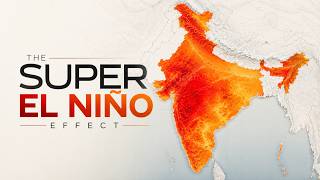
Global warming is having increasingly negative health effects, particularly in relatively poor and hot countries such as India. These impacts are partly due to the direct effect of high temperatures on the human body, and partly due to vector-borne diseases and reduced food availability. While numerous harmful health effects of high temperatures...
In 2022, about 58,400 protected geographical indications (GIs) existed globally, with Europe holding a lion’s share (53.1%) and China leading country-wise registrations (9,571). In 2022, India had 605 GI-registered products and 29,624 authorized users. The study has found that handicrafts dominated GI registrations (56.53%), followed by agricultural products (32.56%). Across Indian states, the study...
Journal of Environmental Economics and Management, May 2026
India consistently ranks among the countries with the highest levels of ambient air pollution worldwide. At the same time, it faces significant challenges in neonatal health, with newborns having low birth weights which have been shown to have long-term impacts on health and labor market outcomes...
2019-2026 @ Indira Gandhi Institute of Development Research - Library
Reach us:
lib@igidr.ac.in
022- 69096504/528
Disclaimer: Copyrights of images/videos/links/content used on this page belong to respective publishers/websites, and are used only for disseminating information for academic and research purposes. If anyone has objections, may please contact us at the above mentioned email address
















 022- 69096504/528